+86-21-34622842(REP.) +86-21-34622015(REP.)
- All
- Product Name
- Product Keyword
- Product Model
- Product Summary
- Product Description
- Multi Field Search
Views: 0 Author: Site Editor Publish Time: 2026-06-02 Origin: Site
Patients seeking transformative skin results often hesitate before booking clinical treatments. The unavoidable clinical downtime creates a significant friction point for decision-stage buyers. We must address this core concern directly. Understanding recovery means separating two distinct realities. Clinical healing occurs when your skin is no longer physically compromised. In contrast, social downtime defines the days you feel uncomfortable returning to the office or attending public events. Recognizing this difference helps you set realistic expectations. Recovery from a fractional CO2 laser is highly predictable. However, it strictly depends on treatment depth, patient compliance, and the specific technology utilized. By following a clear medical roadmap, you can minimize isolation days and optimize your outcome. Read the following guide to discover the exact day-by-day healing timeline, learn crucial risk mitigation strategies, and successfully manage your post-treatment journey.
Average social downtime ranges from 5 to 7 days for moderate settings; deep ablative treatments require 10 to 14 days.
Recovery progresses through predictable phases: acute inflammation (Days 1-2), epidermal sloughing/peeling (Days 3-5), and residual erythema (Days 6+).
The precision and pulse control of the specific fractional CO2 laser machine used significantly dictate the extent of collateral thermal damage and subsequent recovery speed.
Strict medical-grade aftercare—focusing on occlusive barriers and infection prevention—is a non-negotiable requirement for optimal, complication-free healing.
Patients and clinics constantly navigate a core decision problem. We call this the downtime equation. You must balance desired aesthetic outcomes against acceptable recovery windows. Aggressive treatments deliver dramatic collagen production. They also demand longer recovery periods. You cannot expect profound wrinkle reduction without a physiological response.
You must differentiate between two specific recovery timelines to plan your schedule accurately.
Clinical Healing: This phase involves the physical closure of micro-wounds. Skin re-epithelialization typically happens within 3 to 5 days. Your epidermal barrier is mostly restored by this point. The risk of severe infection drops significantly.
Social Downtime: This phase relates purely to aesthetics. You will notice grid marks, active peeling, and persistent redness. These visible signs usually last 5 to 10 days. You might feel perfectly fine physically, but you may prefer avoiding social events.
You might encounter clinics promising "zero downtime" for true resurfacing. This claim is scientifically inaccurate. Genuine fractional ablation requires a profound physiological healing cascade. The laser purposefully creates controlled micro-injuries. These injuries stimulate fresh collagen synthesis. You cannot bypass the body's natural tissue repair cycle. Accept the biological process. Setting a realistic baseline expectation ensures high satisfaction and lowers post-treatment anxiety.
Common Mistake: Many patients schedule treatments right before major life events. They assume they will look flawless in three days. This false assumption causes immense stress.
Best Practice: Always buffer your expected recovery by an additional two days. If your doctor estimates five days of social isolation, plan for seven. This buffer accounts for natural physiological variations.
Recovery follows a highly predictable sequence. Understanding this timeline helps you navigate daily changes confidently. Your body will progress through four distinct phases.
Right after treatment, your skin feels intensely hot. It closely resembles a severe sunburn. Heat, swelling, and clear oozing are entirely normal physiological responses. You might also notice pinpoint bleeding. This depends heavily on the chosen ablation depth.
Actionable logic dictates a simple rule for these first 48 hours. You must strictly stay home. Begin the continuous application of prescribed occlusive ointments. Never let your treated skin dry out. Sleep elevated on two or three pillows to minimize facial swelling.
Facial swelling begins to subside. However, micro-crusts will rapidly darken. You will clearly see a distinct "grid pattern" from the laser micro-beams. Your face will feel rough, much like fine sandpaper. Skin begins to naturally slough off during this specific window.
Risk mitigation is absolutely crucial here. We strongly warn against picking the crusts. Manual exfoliation risks permanent scarring. It also triggers severe post-inflammatory hyperpigmentation. Let the dead skin detach naturally.
What to watch out for: Severe itching frequently occurs as the skin peels. Avoid scratching at all costs. Tap the skin lightly or apply prescribed cold compresses to relieve the itch safely.
Crusting gradually resolves. It reveals fresh, highly sensitive pink skin beneath. The epidermal barrier has closed completely.
Your next-step action involves a routine shift. Transition from heavy occlusives to approved gentle moisturizers. Most treating physicians will clear you for light makeup application by day seven. You can finally return to public spaces comfortably.
You will notice prolonged pinkness known as erythema. This pink hue fades gradually over several weeks. Strict UV avoidance remains mandatory during this period. Unprotected sun exposure easily causes dark spots. Wear broad-spectrum SPF daily. Always wear wide-brimmed hats outdoors.
Recovery Phase | Typical Timeline | Physical Symptoms | Required Action |
|---|---|---|---|
Acute Phase | Days 1–2 | Intense heat, swelling, oozing, pinpoint bleeding | Apply heavy occlusives continuously. Rest indoors. Sleep elevated. |
Exfoliation Phase | Days 3–4 | Dark grid marks, sandpaper texture, active peeling | Do not pick crusts. Continue moisture protocols. Manage itching. |
Emergence Phase | Days 5–7 | Crusting clears, revealing sensitive pink skin | Switch to gentle moisturizers. Clear makeup use with doctor. |
Residual Erythema | Weeks 2–4+ | Fading pinkness, high UV sensitivity | Apply daily SPF. Strictly avoid direct sun exposure. |
Why do some patients recover in five days while others need two full weeks? Several distinct variables uniquely influence individual healing speeds. You must evaluate these factors during your initial consultation.
Dermatologists fully customize treatment parameters. Micro-beam depth controls how deeply the thermal energy penetrates. Spacing dictates the density of the ablation grid. Light resurfacing might require only 4 days of isolation. Conversely, severe acne scar revision demands deep ablation. This aggressive approach pushes social downtime closer to 14 days. We adjust these settings based on your specific clinical goals.
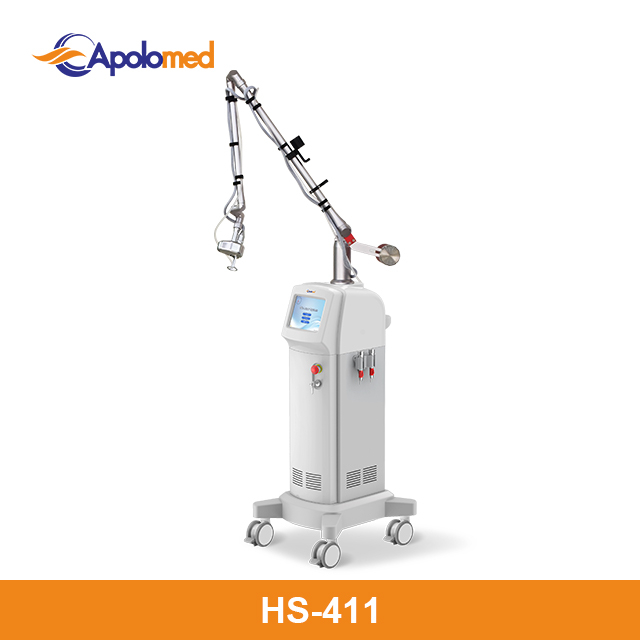
The core technology matters immensely. The precision of your chosen fractional CO2 laser machine impacts recovery directly. Premium devices offer ultra-short pulse durations. They deliver energy in microseconds. They vaporize tissue instantly before heat transfers to neighboring healthy cells. This minimizes collateral thermal spread. Consequently, it accelerates your overall recovery. Older or lower-tier machines often cause excessive heat damage. This prolonged thermal injury extends your swelling and redness unnecessarily. Always ask your provider about their specific equipment capabilities.
Your unique biology ultimately dictates your exact timeline. Consider these key physiological factors:
Age and Cellular Turnover: Younger patients naturally synthesize new tissue faster. Cellular regeneration slows as we age, slightly extending clinical healing.
Skin Type (Fitzpatrick Scale): Providers use this scale to assess pigment risks. Type I and II skin types generally tolerate aggressive settings well. Type IV to VI skin types carry a higher risk of hyperpigmentation. Doctors must reduce energy levels or space out the micro-beams for darker skin. This cautious approach naturally alters your expected downtime.
General Health: Smoking, poor nutrition, or compromised immunity drastically delay wound closure.
Healing requires strict medical-grade aftercare. You must actively protect your investment. Following clinical protocols minimizes serious risks and prevents scarring.
Your compromised skin barrier invites dangerous pathogens. Doctors universally prescribe prophylactic antivirals. This standard protocol prevents dormant cold sore outbreaks from spreading aggressively across the treated area. You will likely start these medications one day before your session. You may also receive specific antibacterial regimens. Complete every prescribed pill. Consistency guarantees safety.
Moist wound healing represents a fundamental medical standard. You must keep the skin constantly coated in an occlusive barrier. Common options include medical-grade petrolatum or Aquaphor. Reapply this barrier diligently every few hours. A dry, hardened crust leads to delayed healing. It also increases your scarring risks significantly.
Many providers highly recommend dilute white vinegar soaks. This acetic acid solution provides immense physical relief. It gently debrides the dead skin. More importantly, it prevents microbial overgrowth. Mix one teaspoon of plain white vinegar into two cups of distilled water. Chill the mixture in your refrigerator. Soak sterile gauze pads in this cold solution. Apply them gently to your face for ten minutes. The cold temperature powerfully constricts blood vessels, reducing swelling.
Your fresh skin remains incredibly vulnerable. We enforce strict environmental constraints for the first two weeks.
Avoid Direct UV Rays: Stay indoors. Sun exposure destroys new collagen and causes hyperpigmentation.
Avoid High-Heat Environments: Skip the sauna. Pause your intense workouts. Sweat introduces bacteria into open micro-wounds. Heat exacerbates painful swelling.
Avoid Active Ingredients: Halt all unapproved active topical formulas. Keep retinoids, vitamin C, and exfoliating acids away from your face. Wait at least 14 days before reintroducing them. Always seek physician approval first.
Best Practice: Change your pillowcase every single night during the first week. This simple hygiene habit drastically reduces microbial exposure while you sleep.
Is the required downtime truly worth the disruption to your routine? You must evaluate the ultimate return on investment. Let us compare aggressive ablation against low-downtime alternatives.
Consider non-ablative lasers or radiofrequency (RF) microneedling. They boast minimal social isolation. However, their clinical impact remains modest. One intensive 7-day downtime session often yields spectacular results. These outcomes typically equal three or four low-downtime treatments combined. You save money and reduce total clinical visits in the long run.
Treatment Category | Expected Social Downtime | Typical Number of Sessions | Primary Clinical Value |
|---|---|---|---|
Non-Ablative Lasers | 1 to 2 days | 3 to 5 sessions | Mild textural improvement, quick recovery. |
RF Microneedling | 2 to 4 days | 3 to 4 sessions | Tissue tightening, moderate scar reduction. |
Fractional CO2 Ablation | 5 to 14 days | 1 to 2 sessions | Dramatic resurfacing, deep wrinkle correction. |
Patients need clear logic to make informed decisions. Look closely at your upcoming calendar. If you absolutely cannot commit to 5 to 7 days off work, step down. A non-ablative solution suits your fast-paced lifestyle better. Conversely, you might want maximum correction for deep wrinkles. Severe acne scars also require aggressive intervention. In these cases, you must embrace the process and plan for the dedicated CO2 recovery window.
Practices face similar critical considerations. Providers must evaluate which precise treatments to offer. Clinical success relies on careful patient selection. Clinics must align the correct laser intensity with the patient's real-world lifestyle. Proper alignment ensures high patient satisfaction. It also guarantees remarkably low complication rates. Upgrading your clinic's equipment to a modern fractional CO2 laser machine gives providers the versatile pulse control needed to handle both light and aggressive cases effectively.
Fractional ablation remains the gold standard for profound skin rejuvenation. The associated downtime is an unavoidable reality. However, it is a highly manageable process. Expect 5 to 7 days of social isolation for standard facial treatments. Deep scar revision will demand slightly more patience.
Remember, successful healing is a dedicated partnership. It relies heavily on advanced machine technology and provider expertise. It equally demands your strict compliance regarding aftercare. You control the daily hygiene and moisture protocols at home.
Do not let recovery anxiety delay your aesthetic goals. We encourage you to schedule a professional clinical consultation today. A qualified provider will map out a customized treatment depth. They will design a specific recovery timeline based on your anatomical needs and social calendar. Plan your journey thoroughly and take the first confident step toward transformative skin renewal.
A: You can typically wash your face after the 24-hour mark. Use only gentle, approved, fragrance-free cleansers. You must never scrub or use rough washcloths. Gently splash lukewarm water over your face. Use your bare fingertips to lightly apply the cleanser. Rinse gently and pat the skin dry with a clean towel. Avoid abrasive motions entirely.
A: Most patients can safely wear makeup between days 5 and 7. You must wait until all open skin has closed entirely. The crusting phase must fully resolve first. Applying makeup over open micro-wounds invites severe bacterial infection. Once your physician confirms complete re-epithelialization, use clean brushes and fresh, mineral-based cosmetics.
A: You will experience acute, sunburn-like redness during the first 4 days. After the crusting flakes off, a residual pinkness remains. This prolonged erythema can last anywhere from a few weeks to several months. The exact duration depends entirely on your specific treatment depth, device settings, and baseline skin type.
A: Biology strictly limits how fast you can heal. Strict adherence to aftercare protocols prevents you from prolonging your downtime unnecessarily. Proper moisture and infection control keep recovery on track. However, your body still requires a minimum number of days to synthesize new tissue. You cannot bypass this fundamental physiological process.
Shanghai Apolo Medical Technology Co., Ltd is a leading designer and manufacturer of Intense Pulsed Light (IPL), Various technologies Laser (Pico Nd:YAG,CO2......), Platform Laser, HIFU, PDT LED, Body Slimming technologies for using in medical and aesthetic industries.
 Copyright © 2021 Shanghai Apolo Medical Technology Co., Ltd All Right Reserved. Sitemap Support By Leadong