
+86-21-34622842(REP.) +86-21-34622015(REP.)
- All
- Product Name
- Product Keyword
- Product Model
- Product Summary
- Product Description
- Multi Field Search
Views: 215 Author: Site Editor Publish Time: 2025-11-21 Origin: Site
The Nd:YAG (Neodymium-doped Yttrium Aluminum Garnet) laser is one of the most versatile and widely used lasers in a variety of fields, ranging from medical treatments to industrial applications. Whether you're a professional in the field, a student, or simply curious about laser technology, understanding the Nd:YAG laser's workings, applications, and safety protocols is crucial.
In this article, we will explore the Nd:YAG laser in detail, uncovering its core principles, its applications across different industries, and why it remains a go-to technology for both medical and industrial professionals. By the end, you'll have a clear understanding of how this laser works, its advantages, and how it compares to other types of lasers.
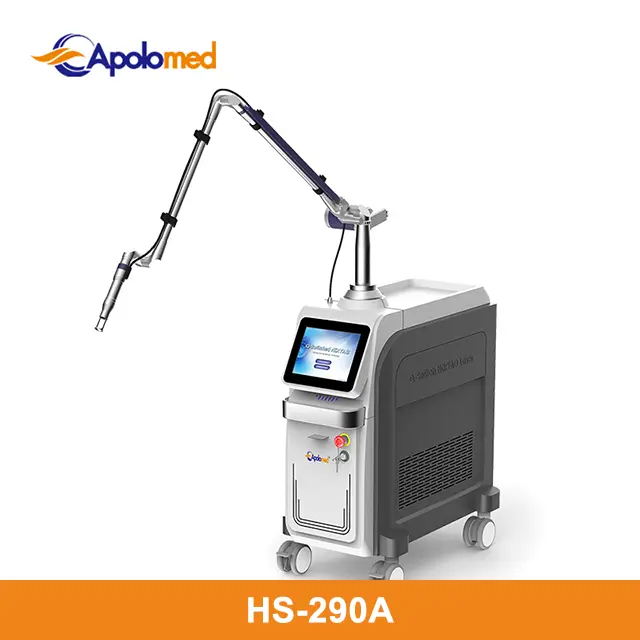
The Nd:YAG laser is a solid-state laser that uses a crystal of yttrium aluminum garnet (YAG) doped with neodymium ions (Nd) as its gain medium. The laser emits light at a wavelength of 1,064 nm, which places it in the near-infrared spectrum. This makes it ideal for a wide range of applications, from cutting and welding metals to performing delicate surgical procedures.
The Nd:YAG laser is unique because it is capable of operating at both continuous wave (CW) and pulsed modes, depending on the specific needs of the application. In CW mode, it produces a steady beam of light, while in pulsed mode, it delivers high-intensity bursts of energy. This versatility is part of what makes the Nd:YAG laser so widely used across various industries.
Wavelength: 1,064 nm (near-infrared).
Gain Medium: Neodymium-doped yttrium aluminum garnet.
Operation Modes: Continuous wave and pulsed.
Power Output: Can vary depending on application, ranging from a few watts to thousands of watts.
The Nd:YAG laser operates by stimulating the neodymium ions embedded within the YAG crystal. The process begins when the crystal is excited by an external light source, typically another laser or a flashlamp. This energy causes the neodymium ions to jump to a higher energy state. When these ions return to their lower energy states, they release photons of light. The photons bounce back and forth between mirrors placed at both ends of the crystal, amplifying the light with each pass until it is emitted as a coherent laser beam.
Excitation: A flashlamp or diode laser excites the neodymium ions in the YAG crystal.
Photon Emission: The excited ions emit photons as they return to their ground state.
Amplification: The photons are reflected between mirrors, amplifying the light.
Output: The final laser light is emitted through an output mirror.
The power of the Nd:YAG laser can be adjusted by controlling the duration and frequency of the pulses in pulsed mode or adjusting the power of the external light source in continuous wave mode. The ability to modify power output makes the Nd:YAG laser adaptable to various precise needs.
Nd:YAG lasers are used in a wide range of applications, each taking advantage of the laser's unique characteristics, such as its high power and precision. Below are some of the most notable uses of this laser technology.
In the medical field, Nd:YAG lasers are employed in a variety of treatments, particularly in surgery and dermatology. The laser's ability to target specific tissues with precision while minimizing damage to surrounding areas is invaluable. Some of the key medical applications include:
Laser Surgery: Nd:YAG lasers are used in procedures such as eye surgery (e.g., cataract removal), dental surgery, and skin resurfacing. The precision of the laser allows for less invasive procedures with faster recovery times.
Endoscopic Surgery: Nd:YAG lasers can be used in minimally invasive surgeries, where the laser is used to cut or coagulate tissues through small incisions or even fiber-optic instruments.
Hair Removal: Nd:YAG lasers are also commonly used for long-lasting hair removal, especially for individuals with darker skin tones.
The versatility of the Nd:YAG laser extends beyond medicine and into industrial sectors. Its ability to cut, weld, and engrave materials makes it indispensable in various manufacturing processes:
Laser Cutting: Nd:YAG lasers are used to cut metals, plastics, and ceramics with high precision, offering clean edges and reducing the need for secondary finishing operations.
Laser Welding: Nd:YAG lasers are used in welding delicate parts in industries such as aerospace, electronics, and automotive. The focused energy can weld very thin materials with minimal heat affected zones.
Laser Marking and Engraving: Nd:YAG lasers are ideal for marking or engraving items such as circuit boards, medical devices, and jewelry, due to their ability to work on a wide variety of materials.
Several key features make the Nd:YAG laser an ideal choice for both medical and industrial applications. Here are some of the main advantages:
Precision and Accuracy: The focused beam allows for high precision, which is essential in applications like surgery and micro-manufacturing.
Minimal Heat Affected Zone: The laser's ability to deliver energy to a small, focused area minimizes the heat damage to surrounding tissues or materials.
Versatility: Nd:YAG lasers can operate in both pulsed and continuous modes, allowing them to be adapted for a variety of uses.
Deep Tissue Penetration: The 1,064 nm wavelength penetrates deeply into tissues, making it effective for certain medical procedures like tumor ablation or hair removal.
Durability and Reliability: Nd:YAG lasers have long operational lifespans and require relatively low maintenance compared to other laser types.
While Nd:YAG lasers are widely used, they are not the only type of laser technology available. Here's how Nd:YAG compares to some other common laser types:
| Feature | Nd:YAG Laser | CO2 Laser | Diode Laser |
|---|---|---|---|
| Wavelength | 1,064 nm | 10,600 nm | 800-980 nm |
| Primary Use | Medical, Industrial | Cutting, engraving, medical | Hair removal, surgery |
| Power Output | High power (varies) | High power | Low to medium power |
| Penetration Depth | Deep penetration | Shallow penetration | Shallow to moderate |
| Material Compatibility | Metals, plastics, ceramics | Non-metallic materials (e.g., skin) | Soft tissue, skin |
While Nd:YAG lasers are often chosen for deep penetration and high precision, CO2 lasers are preferred for cutting and engraving non-metallic materials, and diode lasers are commonly used for smaller-scale applications like hair removal.
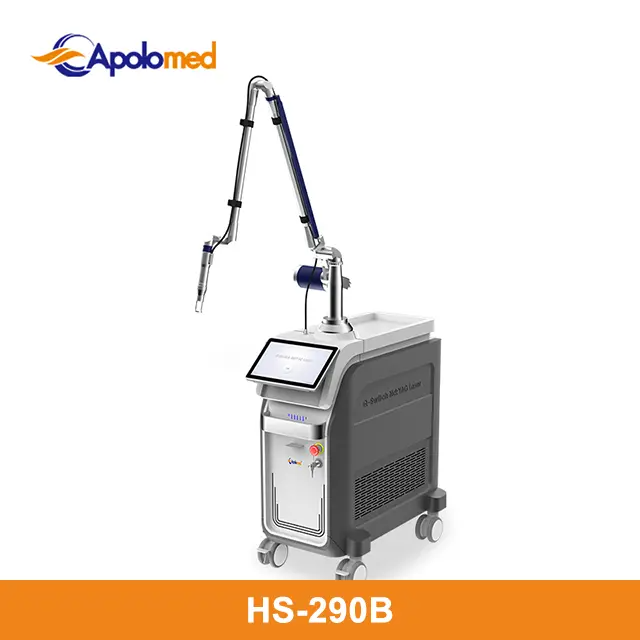
While Nd:YAG lasers are incredibly useful, safety is a critical consideration when using any type of laser. The high power and focused energy beam can cause harm if not handled properly. Key safety protocols include:
Protective Eyewear: Both users and patients must wear laser-specific protective eyewear to shield against the intense light.
Proper Training: Operators must be trained in both the theoretical and practical aspects of laser technology to minimize risks.
Controlled Environment: Lasers should only be used in a controlled environment, such as a medical facility or an industrial setting with proper safety protocols.
As with any technology, Nd:YAG lasers are evolving. Innovations are focused on enhancing their precision, reducing their size, and improving their cost-effectiveness. Some trends to watch include:
Miniaturization: Smaller, more compact Nd:YAG lasers are being developed, making them suitable for portable devices and handheld tools.
Fiber Optic Technology: The integration of fiber optics with Nd:YAG lasers is improving their efficiency and enabling new applications in both medical and industrial fields.
Customization: There is a growing trend towards customizing the wavelength, power, and pulse characteristics of Nd:YAG lasers to fit specific needs in niche markets.
The Nd:YAG laser is an invaluable tool across multiple industries, offering precision, versatility, and reliability. From medical surgeries to industrial manufacturing, its unique properties enable professionals to achieve optimal results with minimal risk. Understanding how this technology works and its key applications can help individuals and businesses make informed decisions when choosing laser technology for their needs.
1. What makes Nd:YAG lasers different from other lasers?
Nd:YAG lasers have a distinct wavelength of 1,064 nm, which allows for deep tissue penetration and high precision. This makes them ideal for medical surgeries, such as cataract treatments and laser hair removal, as well as industrial applications like welding and cutting.
2. Can Nd:YAG lasers be used on all skin types?
Yes, Nd:YAG lasers are effective on all skin types, especially when it comes to hair removal. The laser's ability to penetrate deeper into the skin makes it suitable for individuals with darker skin tones, where other laser types might be less effective.
3. How long do Nd:YAG lasers last?
With proper maintenance, Nd:YAG lasers can last for many years. Their durability and reliability make them a preferred choice in both medical and industrial settings. However, regular servicing is necessary to ensure optimal performance.
4. Is it safe to use Nd:YAG lasers for cosmetic treatments?
Yes, Nd:YAG lasers are widely used in cosmetic procedures, including hair removal and skin resurfacing. However, safety measures like protective eyewear and professional training are essential to minimize risks.


 Copyright © 2021 Shanghai Apolo Medical Technology Co., Ltd All Right Reserved. Sitemap Support By Leadong


